Why Community and Ritual Are Becoming Part of Modern Mental Health Treatment
Some of the most meaningful moments of emotional connection happen outside a therapist's office. Around a table. During a shared conversation. In the quiet moments when someone realizes that another person understands exactly what they have been carrying.
For years, conversations about mental health have focused heavily on individual treatment. And while one-on-one therapy remains valuable, there is growing recognition that emotional well-being is also shaped by our relationships, our communities, and the ways we create meaning in everyday life.
This is where community and ritual enter the conversation. Not as replacements for clinical care, but as opportunities to experience something many people are missing: genuine connection.
Mental Health Was Never Meant to Be Entirely Individual
Why Connection Matters for Emotional Well-Being
We need people. Not simply people to talk to, but relationships where we can feel understood, accepted, and supported without constantly explaining ourselves.
The U.S. Surgeon General's advisory on loneliness and social connection identifies social connection as an important contributor to mental and physical health, highlighting how isolation and loneliness can affect well-being across the lifespan.
That connection matters. When someone is navigating anxiety, grief, motherhood, relationship changes, or personal uncertainty, having supportive relationships can provide something that individual coping strategies alone may not offer.
A sense of belonging.
The Emotional Cost of Feeling Disconnected
Loneliness isn't always obvious. You can have a busy schedule, a family, coworkers, and an active social life while still feeling as though nobody truly knows what you're experiencing.
For many women, this disconnect develops gradually as responsibilities accumulate, friendships change, and opportunities for meaningful conversation become harder to find amid the demands of work, caregiving, and everyday life.
Something gets lost. The casual conversations that once provided comfort become less frequent, and the space to explore your own feelings can disappear beneath everything you're expected to manage.
Community-based mental health support offers another possibility: intentionally creating opportunities for connection rather than waiting for those moments to happen on their own.
The Role of Ritual in Mental Health
Why Meaningful Rituals Can Provide Stability
Rituals aren't necessarily religious or spiritual. They can be as simple as lighting a candle before journaling, taking a quiet walk every Sunday, gathering with friends each month, or setting aside time to reflect on what you need.
The intention matters. While routines help organize our days, rituals can create moments of personal meaning, allowing us to slow down and bring attention to experiences that might otherwise pass unnoticed.
During periods of uncertainty, these intentional practices may offer a sense of familiarity and structure. They create opportunities to reflect, reconnect with personal values, and acknowledge emotions without immediately trying to change them.
There is room here. Not every difficult feeling needs to become a problem to solve, and sometimes having a consistent place to acknowledge what we're experiencing is meaningful in itself.
How Ritual Differs From Routine
A routine is something you do regularly. A ritual adds intention to that action, inviting you to consider why it matters and what you want to take from the experience.
Consider journaling. Writing down a few thoughts before bed might be part of your daily routine, but intentionally reflecting on what you're ready to release or what you hope to cultivate can turn that familiar activity into a personal ritual.
Neither approach is inherently better. What matters is finding practices that feel authentic, supportive, and manageable within the realities of your life.
When shared with others, rituals can also become opportunities for connection, offering a common experience around which people can gather, reflect, and build relationships.
Why Women's Circles and Community Groups Are Resonating
The Value of Being Seen and Understood
There is something different about being heard by someone who isn't trying to fix you. Someone who can sit with your experience, recognize its complexity, and offer understanding without immediately turning the conversation toward advice.
Women's circles and community groups can create opportunities for this kind of interaction, particularly when gatherings emphasize respectful listening, personal reflection, and the freedom to participate at a comfortable pace.
You don't need answers. Sometimes the most meaningful part of a gathering is discovering that another woman has experienced similar uncertainty, frustration, grief, or longing for something different.
The Surgeon General's recommendations for strengthening social connection encourage participation in community groups as one way to develop belonging, meaning, and supportive relationships.
Of course, not every group will feel right for every person. A supportive environment depends on thoughtful facilitation, appropriate boundaries, and respect for different comfort levels and experiences.
New Moon Circles as Opportunities for Reflection
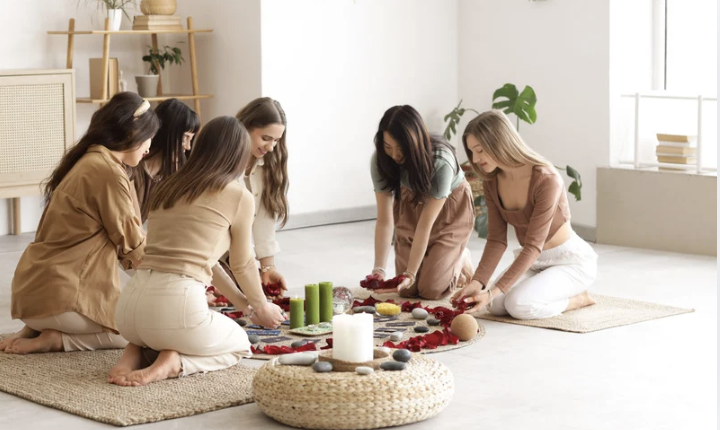
A new moon circle is one example of a gathering centered on shared intention and reflection. Rather than focusing on the moon as a source of clinical treatment, these circles can use the lunar cycle as a symbolic reminder to slow down, check in with yourself, and consider what feels meaningful.
The symbolism is personal. For some women, the new moon represents beginnings or renewal, while others simply appreciate having a recurring opportunity to step away from daily responsibilities and reconnect with themselves.
Activities might include guided reflection, journaling, mindfulness, creative expression, or group discussion, depending on how a particular circle is structured.
What makes these gatherings meaningful isn't a promise of emotional transformation. It's the opportunity to participate in intentional practices alongside others who are also making space for reflection and connection.
How Community and Ritual Can Complement Therapy
Connection and Professional Mental Health Treatment
Community and ritual mental health treatment discussions often bring together two related but distinct forms of support: evidence-based clinical care and practices that nurture social connection and personal meaning.
Both deserve consideration. Therapy can provide individualized assessment, treatment planning, and clinical interventions, while community gatherings may offer companionship, shared experiences, and opportunities to practice reflection outside a formal treatment setting.
They serve different purposes.
Someone managing significant depression, trauma symptoms, or persistent anxiety may benefit from professional mental health treatment, even when supportive relationships and meaningful rituals are already part of their life.
Community spaces can complement that care, but participation in a circle or wellness gathering should not be presented as a substitute for psychotherapy or other clinically indicated treatment.
Finding Support That Fits Your Needs
Mental health support doesn't have to look identical for everyone. Some people feel most comfortable exploring difficult emotions privately, while others appreciate opportunities to connect with people navigating similar life experiences.
Your needs may change. There may be seasons when individual therapy feels essential and others when community gatherings, creative activities, or personal rituals provide additional opportunities for connection and reflection.
At Revitalizing Minds Project, the approach to well-being incorporates creative expression, holistic wellness practices, and therapeutic services that recognize the relationship between emotional experiences and everyday life.
The practice also explores the connection between mind and body in its article on stress reduction through somatic and mindfulness-based practices, offering another perspective on how intentional practices may support emotional well-being.
Finding Space for Connection at Revitalizing Minds Project
Community as Part of a Holistic Approach
Connection deserves attention. Through offerings such as women's gatherings and the Motherhood Collective, Revitalizing Minds Project recognizes that meaningful relationships and shared experiences can play an important role in how people experience support.
For women navigating transitions, seeking deeper friendships, or simply wanting a place to reconnect with themselves, community gatherings can offer opportunities to step outside familiar roles and participate in something centered on their own experiences.
There is no perfect way to begin. You don't have to arrive with a clear intention, a particular belief system, or a complete understanding of what you need.
Sometimes showing up is enough.
Exploring What Connection Could Look Like for You
You may be looking for community. You may be curious about meaningful rituals, interested in a women's circle, or wondering whether a more holistic approach to mental health support might fit your needs.
There's room to explore. If you'd like to learn more about Revitalizing Minds Project's groups, wellness offerings, or therapeutic services, you're welcome to reach out and start a conversation.
No pressure to have everything figured out. Just an opportunity to discover what feels right for you.